

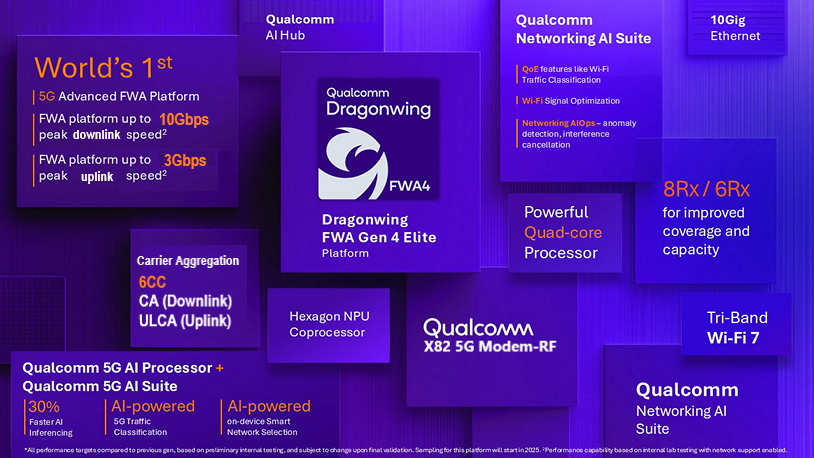
Picking a good chipset is just the beginning when you're building a great 5G FWA CPE. How well it really works depends on a bunch of choices you make after you pick the chipset – stuff like how you lay out the RF components, tune the antenna, deal with heat, and set up the firmware.
At SUNCOMM, we think of the Qualcomm X82 as a good starting point, not the final product. Keep reading to learn how SUNCOMM engineers get top performance from the X82 through smart system design, testing in the field, and always trying to make things better.
SUNCOMM's way of thinking starts with something simple:
If it only looks good in a lab, it's not good enough.
Instead of trying to get the highest scores in tests, SUNCOMM cares about:
l Staying stable for a long time.
l Working as expected when the network is busy.
l Doing well even when the signal isn't great.
This is how we use the X82 platform in SUNCOMM's CPE products.
With FWA, how well the RF performs sets the limit for everything else.
SUNCOMM engineers focus on:
l Keeping the RF paths between the modem and antenna short and with as little loss as possible.
l Matching the impedance carefully across all the different bands.
l Keeping the cellular RF, Wi-Fi, and fast digital stuff separate.
l Making grounding and shielding decisions based on tests, not just guesses.
When testing the designs, SUNCOMM's RF-optimized X82 designs had more consistent signal and a cleaner SINR, especially when further from the tower.
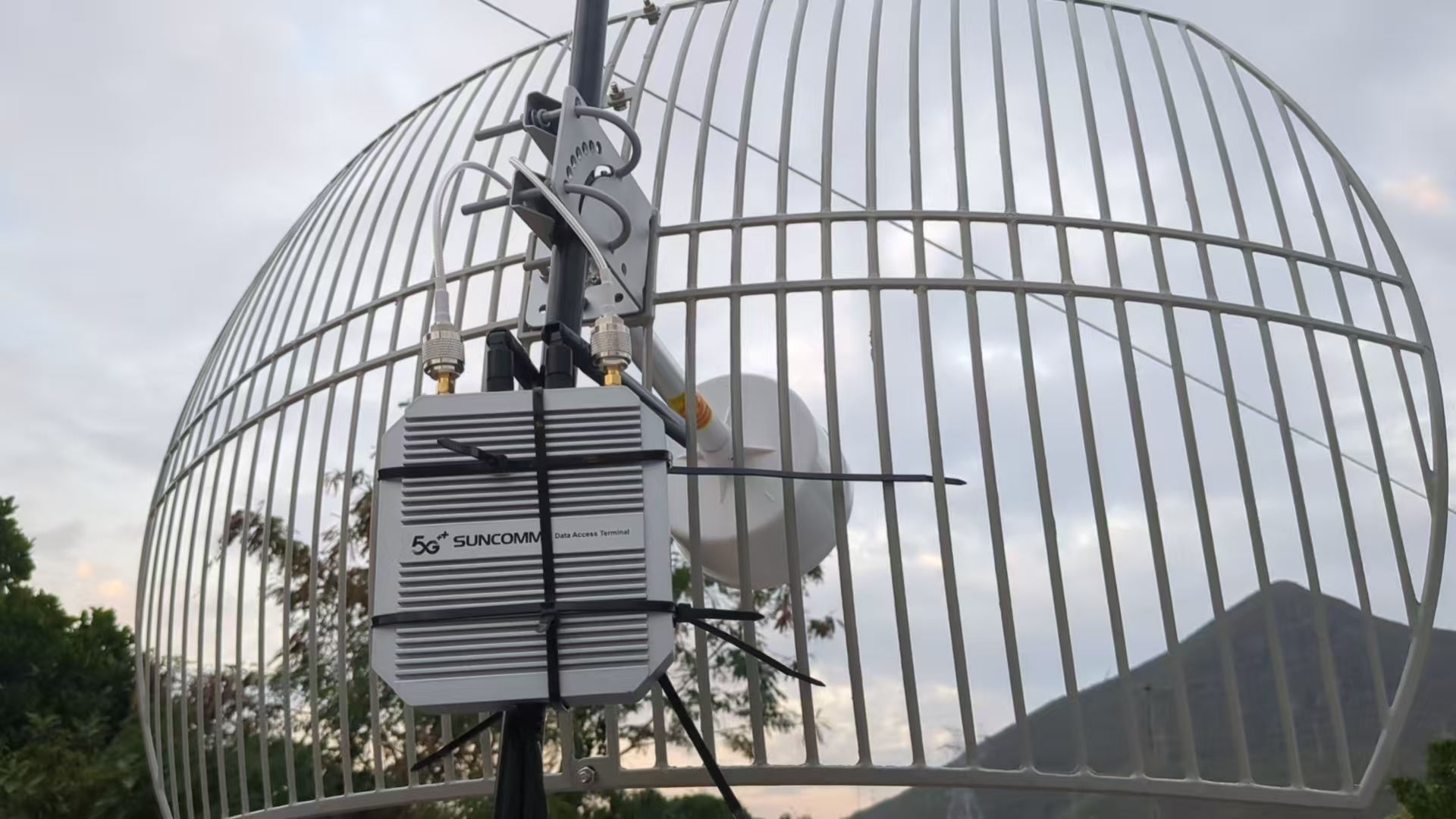
Instead of using generic antennas, SUNCOMM makes and adjusts antennas based on how FWA is really used.
This means:
l Focusing on mid-band Sub-6 GHz (n41 / n77 / n78) performance.
l Balancing range, signal pattern, and physical size.
l Reducing interference between multiple antennas.
l Adjusting antenna tuning for different band priorities in different regions.
Tests in the field showed that tuning for specific markets made the signal more stable and reduced the need to resend data – especially in less dense areas.
SUNCOMM engineers pay close attention to uplink performance.
Why?
Because uplink quality affects:
l How efficiently data is scheduled
l How stable carrier aggregation is
l How fast and reliable your connection is
With the Qualcomm X82, SUNCOMM focuses on:
l Keeping transmit power strong with good RF design.
l Making sure the antenna is good at transmitting, not just receiving.
l Avoiding the heat-induced uplink throttling.
In real-world use, this meant smoother data speeds and fewer dropped connections, even when the network was busy.

FWA CPEs are always on, often in warm places without cooling.
SUNCOMM's heat management for X82-based devices includes:
l Heat spreaders for the modem and RF parts that get hot.
l Airflow inside the device.
l Power limits that favor consistent performance over short bursts.
l Firmware that responds to temperature
Instead of going for short performance spikes, SUNCOMM wants things to work steadily for hours and days.
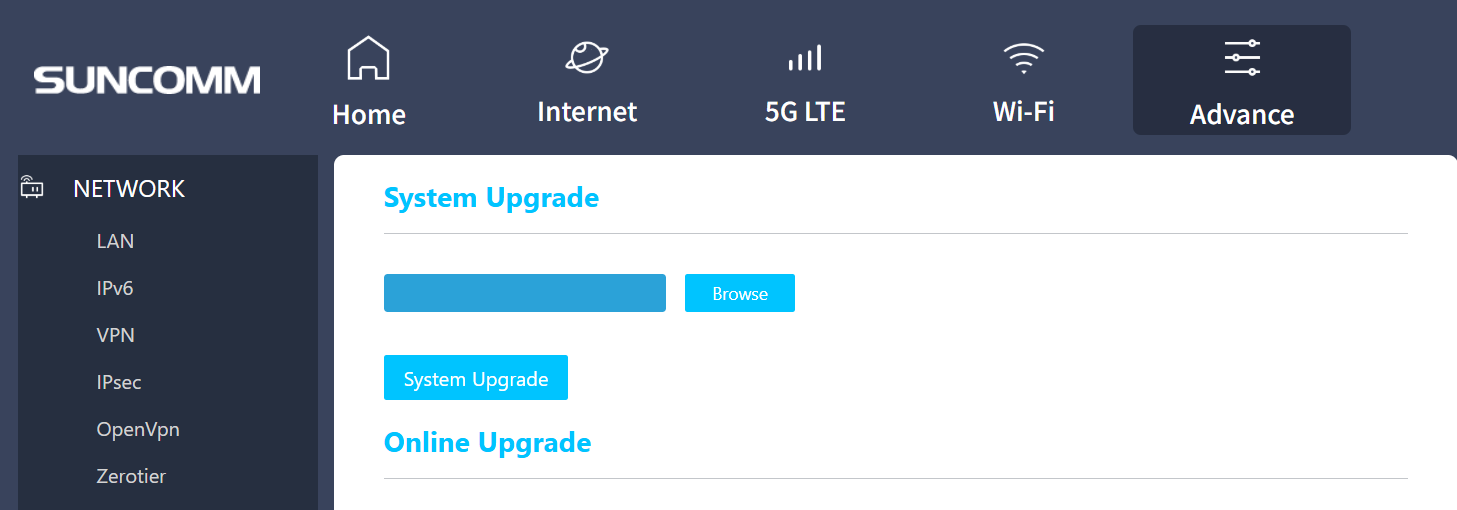
SUNCOMM sees firmware as a key part of making things work well.
On X82-based CPEs, this means:
l Smart band and cell selection.
l Prioritizing carrier aggregation.
l Managing power and heat.
l Ways to handle brief interference.
By making the firmware work with real-world network conditions, SUNCOMM makes sure the X82 platform works well even outside of perfect lab conditions.
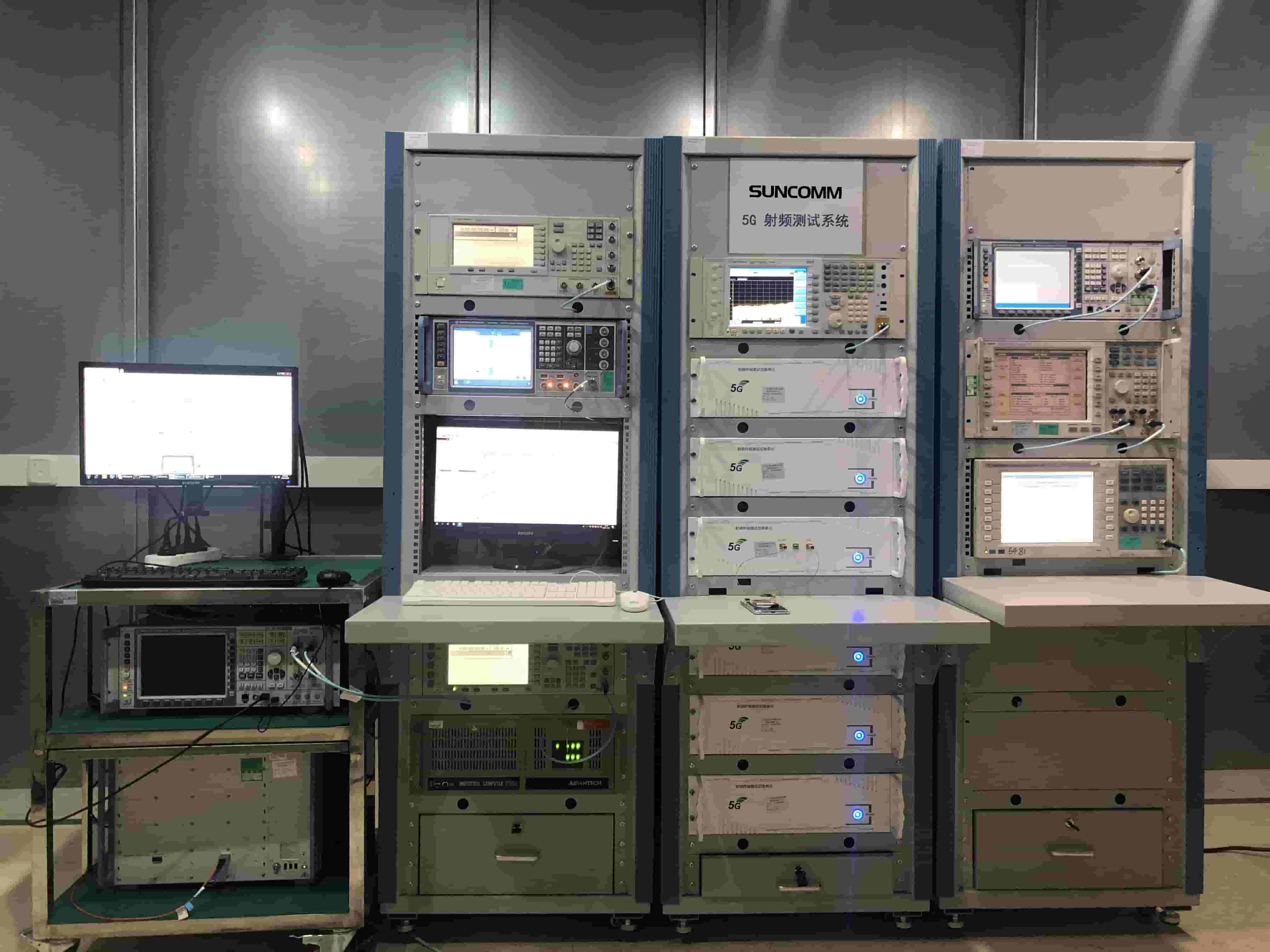
Before any CPE is sold, it goes through a lot of testing:
l RF and signal testing.
l Heat stress testing under constant load.
l Long-term stability testing.
l Live-network tests with real SIM cards.
l Adjustments based on feedback.
This lets SUNCOMM engineers find problems that wouldn't show up in quick lab tests.
By using the Qualcomm X82 platform with careful system-level design, SUNCOMM gets:
l More consistent data speeds.
l Better performance further from towers.
l More stability during busy times.
l Less heat and longer device life.
These things matter most to operators and users.
In short: Engineering Makes Things Reliable
The Qualcomm X82 is a good modem, but to get real performance you need good engineering.
For SUNCOMM, getting the most out of the X82 means:
l Planning RF paths carefully.
l Tuning antennas for real networks.
l Managing heat for constant use.
l Making firmware that works with field conditions.
The result is a more reliable, easy-to-deploy, and scalable FWA solution.