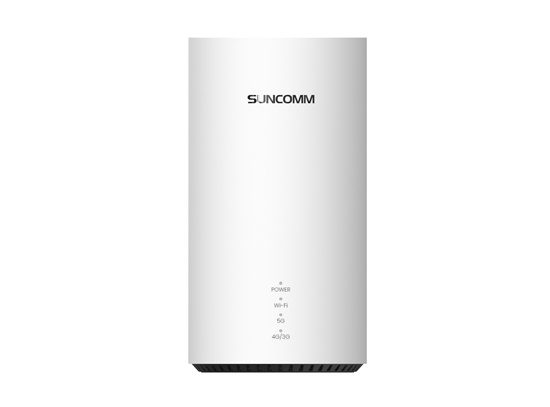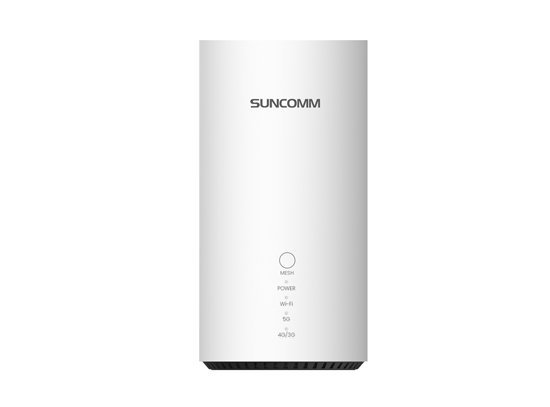

As 5G Fixed Wireless Access (FWA/CPE) becomes more common as a replacement for traditional wired internet, the efficiency of the chipset and how well it performs radio frequency tasks are key to a good user experience. Qualcomm's X82 modem stands out as a great 5G-A option that is ready to go and made for regular FWA/CPE use.
The X85 is for top-end usage, but the X82 finds a good middle ground by having good performance, strong carrier aggregation, using power wisely, and working well in homes, small businesses, and portable 5G devices.
Based on SUNCOMM's work and experience with large setups, here's a detailed look at how the Qualcomm X82 boosts FWA/CPE performance in the real world – and why it's becoming a main piece of SUNCOMM's next product plans.
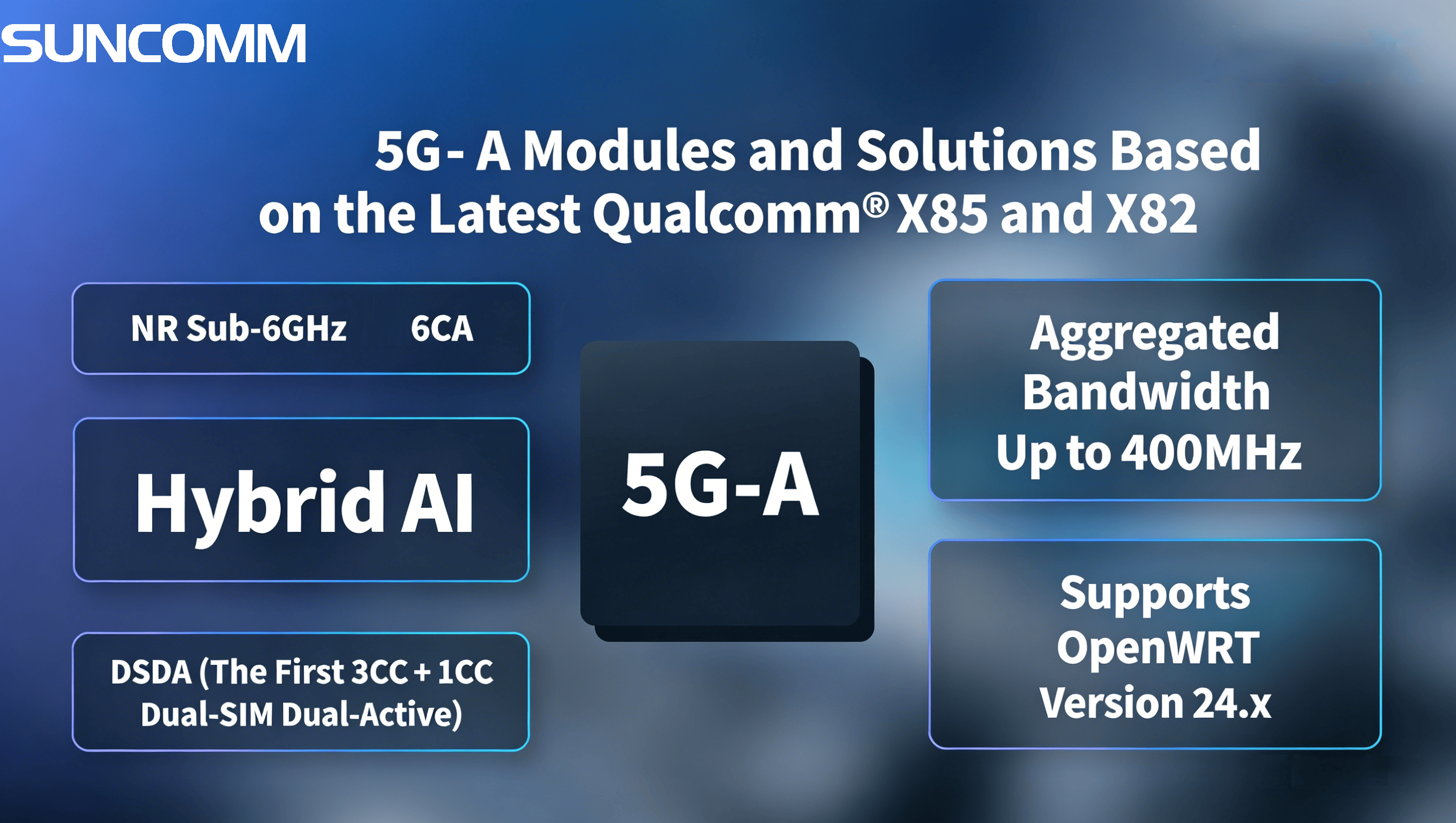
How well a device combines channels in different network situations affects FWA/CPE performance. The X82 has a flexible way of doing this, with:
(1) 3CC / 4CC downlink aggregation based on operator bands
(2) Changes for mid-band + sub-6 combinations
(3) Steady performance in suburban and semi-rural areas
SUNCOMM is one of the leading networking device manufacturers. In SUNCOMM's tests in Southeast Asia, Africa, and Latin America, X82 devices were more stable in the mid-band than other similar chipsets.
**SUNCOMM’s Tip**
To get the most out of the X82's CA, SUNCOMM adjusts how the device prioritizes bands. This lets the CPE connect to cleaner channels, even if the tower allocation isn't regular. This means fewer drops in speed and a more consistent experience for users.
The X82 modem can work with different power amplifiers and LNA setups, but how it's put together matters for real performance.
SUNCOMM’s X82 CPEs have:
(1) PCB antennas with good gain
(2) A carefully set up RF matching network
(3) Better uplink sensitivity for connections on the edge of coverage
(4) Good shielding to reduce internal interference
In field tests, SUNCOMM's X82 units had up to 27–35% better uplink performance in long-distance FWA/CPE situations compared to a standard design.
**Real Benefit:
Better uplink power means the base station can schedule things better, which improves downlink speed and lowers lag.
.jpg "better rf front-end matching for coverage over distance")
How hot a CPE gets is often forgotten in design.
A modem that's too hot lowers power, reduces CA bandwidth, and slows things down – especially during busy times.
The X82 platform is already good at staying cool, but SUNCOMM improves this with:
(1) A cooling setup using aluminum and PC
(2) Heat spreader plates designed for areas with many components
(3) Software that predicts thermal behavior
(4) Adaptive transmit power control to avoid slowing down
This leads to stable, high-speed performance even when things are busy, so operators can keep service consistent.
FWA/CPE devices are always on, so power use affects both the user experience and how long the hardware lasts.
Qualcomm X82 has:
(1) Lower idle power
(2) Lower power use than older platforms
(3) Better scheduling with weak signals
SUNCOMM adds to these benefits by using low-loss RF paths, setting up DC-DC power rails, and using detailed performance settings in software.
Together, these things mean:
(1) Longer hardware lifespan
(2) Lower temperatures
(3) Better stability for VoNR/VoIP, gaming, and streaming
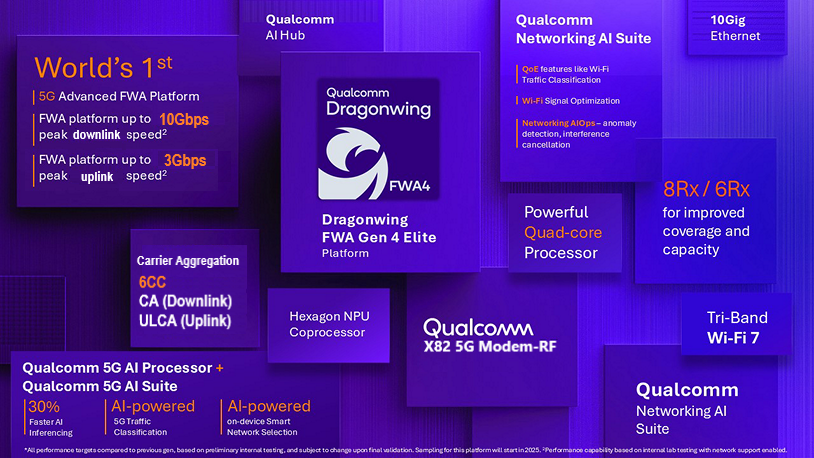
Even though the X82 isn't a flagship like the X85, it has key 5G-A improvements that boost FWA/CPE performance:
(1) Better uplink MIMO
(2) Improved beam management
(3) Faster cell reselection for moving environments
(4) Better NR scheduling
These upgrade options mean SUNCOMM’s X82-based CPEs will stay useful for years, even as networks get more advanced.
Most FWA/CPE customers connect multiple devices over Wi-Fi, so consistent speed is important.
SUNCOMM’s X82 CPE lineup usually has:
(1) Qualcomm-based Wi-Fi 6
(2) MU-MIMO and OFDMA
(3) Good anti-interference design
(4) Antennas for both 2.4GHz & 5GHz
While X85-based devices are looking at Wi-Fi 7, the X82 + Wi-Fi 7 / Wi-Fi 6 setup is good for regular FWA/CPE markets where cost, reliability, and handling interference are more important than lab speeds.
SUNCOMM's idea is simple:
Use Qualcomm X82 as the base, then improve performance through system-level improvements.
Key SUNCOMM practices:
(1) RF-first design
Focusing on clean signal paths, shielding, and ground layout before looks.
(2) Antenna improvements for different markets
Different countries → different bands → different antenna settings.
(3) Working with carriers
SUNCOMM does field tuning with operators to match tower settings, so X82 CPEs give more stable speeds.
(4) Software improvements
From cell-lock tools to band aggregation, SUNCOMM’s software gets the best performance from the X82.
The Qualcomm X82 might not be the top flagship like X85, but for real FWA/CPE setups, it gives what operators and users need:
(1) Strong, stable speed
(2) Good CA performance
(3) Better thermal behavior
(4) Smart power use
(5) Good coverage
Along with SUNCOMM’s work, X82-based CPE devices are strong, affordable, and ready-to-go options for operators.
For large 5G internet rollouts, the X82 platform – and SUNCOMM’s work with it – are balanced and future-proof choices.