

Getting top performance from a 5G CPE isn't just about picking the newest modem chip. In the real world, how well your Fixed Wireless Access (FWA) works depends on how the radio frequency signals travel, how the antennas are set up, how heat is handled, and how the software adapts to changes in the network.
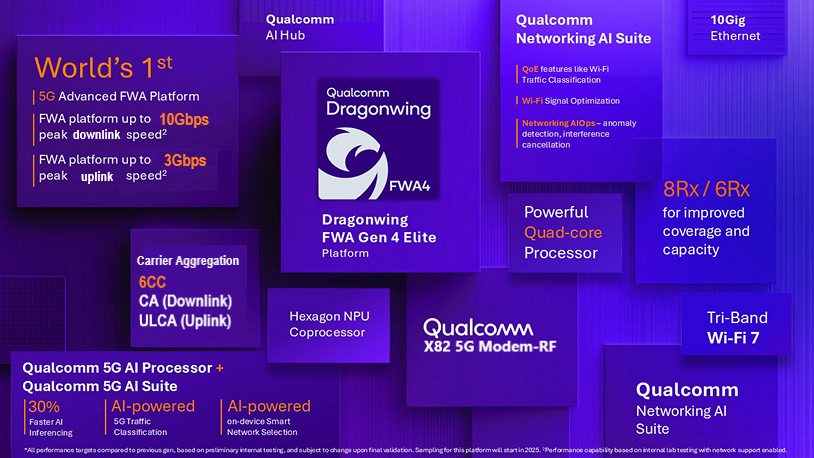
At SUNCOMM, they see the Qualcomm X82 platform as a starting point, not the finished deal. Let's look at what goes into SUNCOMM’s X82 CPE design. I'll explain how radio frequency engineering, antenna design, heat control, and overall tuning work together to keep your FWA running smoothly for a long time.

As a specialized wifi router company, SUNCOMM has one main idea when it comes to radio frequency design: Every tiny bit of signal strength matters for FWA.
In their X82-based CPE products, SUNCOMM does the following:
n Keeps radio frequency paths short and even to reduce signal loss.
n Keeps radio frequency, Wi-Fi, and digital parts separate.
n Uses multiple grounding layers around radio frequency pathways.
n Places shielding based on testing, not just standard layouts.
SUNCOMM found that even small layout changes improved the signal strength for uploads and downloads, especially when the signal was weak. They learned this through testing in special chambers.
**SUNCOMM Testing Note**
Compared to a basic evaluation board, SUNCOMM’s radio frequency design for the X82 got better and more reliable signal strength (RSRP and SINR) when the signal was weak. This means fewer drops in speed.
Some CPEs say they have wideband antennas, but they don't always make them work best for the frequency bands that matter. SUNCOMM does things differently.
For their Qualcomm X82 CPE products, SUNCOMM designs antennas that:
n Focus on the main Sub-6GHz bands (n41 / n77 / n78).
n Balance signal strength, efficiency, and the size of the device.
n Stay working well even if users set them up differently.
n Reduce interference between multiple antennas.
SUNCOMM tunes its antennas for specific markets, adjusting the design based on how operators use their spectrum.
Real-World Test Result
In suburban FWA tests, SUNCOMM’s tuned antenna systems improved upload speeds by up to 30% compared to standard wideband designs using the X75 modem.
For FWA devices that run all day, every day, it's important to keep them running consistently. The Qualcomm X82 is already more power-efficient than other platforms, and SUNCOMM makes it even better with its design.
SUNCOMM’s heat-control plan includes:
n Aluminum heat spreaders placed on the X82's hot spots.
n Heat transfer from the radio frequency parts and power management chip.
n Airflow channels inside the device.
n Firmware that adjusts performance based on temperature.
Instead of trying to hit high benchmark numbers for a short time, SUNCOMM focuses on keeping speeds consistent over the long haul.
Internal Stress Testing
SUNCOMM’s X82 CPE kept running consistently without suddenly slowing down due to heat, even when running at full speed in high temperatures. This is important for devices used by operators.
SUNCOMM sees the firmware as part of the hardware design.
For X82-based CPEs, system tuning includes:
n Algorithms that choose the best band and cell.
n Adjusting transmit power as needed.
n Choosing the best carrier aggregation options.
n Managing heat and power carefully.
These tweaks let the device respond to network changes in real time, making the user experience better without costing more for hardware.
Working with Operators
SUNCOMM works with carrier engineers to fine-tune settings based on how the network is performing. This makes sure the X82 CPEs work as well as possible in real-world situations.
In FWA setups, Wi-Fi is the last step, and it can be a weak spot if not done right.
SUNCOMM’s X82 CPE design includes:
n Carefully placed Wi-Fi antennas to reduce radio frequency interference.
n Clear separation between cellular and Wi-Fi radio frequency areas.
n Firmware-level QoS tuning for homes with multiple devices.
n Stable performance even with many devices connected.
The goal is not just to get the highest possible Wi-Fi speed, but to provide consistent speeds for multiple users and applications.
SUNCOMM X82 CPE goes through several tests:
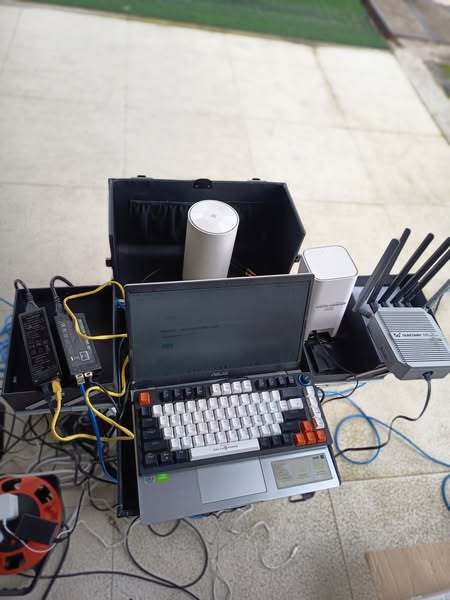
n Radio frequency chamber testing for signal strength and isolation.
n Heat stress testing under continuous load.
n OTA performance checks.
n Live network tests with operator SIM cards.
n Long-term stability testing.
This way, SUNCOMM makes sure its X82-based products are ready to go.

SUNCOMM believes that good CPE/FWA performance comes from careful engineering, not just marketing hype.
They focus on:
n Radio frequency-first design
n Antenna tuning for specific markets
n Heat control
n Constant system-level tuning
SUNCOMM turns the Qualcomm X82 platform into a reliable CPE solution for operators.
In Conclusion: Design for Real-World Performance
The Qualcomm X82 provides a strong modem foundation, but SUNCOMM’s system-level design is what really makes it shine.
With careful radio frequency design, tuned antennas, good heat management, and smart system tuning, SUNCOMM’s X82 CPEs provide consistent, high-quality FWA performance where it counts: in real deployments, over long periods, under real network conditions.
If you're an operator or partner looking for reliable 5G CPE solutions, SUNCOMM’s X82 design offers a balance of performance, efficiency, and long-term dependability.