
In parts of Africa it is hard to get internet.. Even when you have internet it is often hard to share it with everyone in a big area.
There are a reasons for this. Sometimes the fiber internet cables do not go to every neighborhood. Mobile phone networks can get too busy.. Houses may be very close together with narrow streets and not many good places to put internet equipment.
We had to deal with this kind of problem when we did one of our projects. We put our equipment on the roof of a tall building in a densely populated African community. From the roof we could see thousands of homes spread out across the hills and streets.
Of trying to get a separate internet connection for every home we did something simpler. We brought internet to one high spot and then we used long-range WiFi equipment to share that internet with the surrounding area.
The internet connection came from Starlink and the WiFi equipment came from a company called SUNCOMM. This project showed us how satellite internet and long-range wireless technology can work together in areas where it's hard or expensive to build traditional internet infrastructure.
.jpg "wifi2_(1).jpg")
The place where we put our equipment was very challenging. The community was densely populated with buildings close together. From the roof we could see an urban area with houses, roads and hills. This made it hard to get an internet signal to everyone.
It is different from setting up WiFi in a home or office. A regular WiFi router is designed to work with devices that're close by.. When you try to send the signal farther it can get weaker and slower.
To get internet coverage for a whole community you cannot just make the signal stronger. You have to think about where you put the equipment and how you design the antennas.
In our project the roof was very important. Because it was high above the surrounding area it gave us a chance of getting a clear signal to everyone.
This is a principle of long-range WiFi: being high up does not automatically mean you will get a better signal but it can definitely help.
.jpg "wifi4_(1).jpg")
As you can see in the pictures we put the WiFi equipment on a pole on the roof. We did not do this just to make it look good. We did it to improve the internet signal.
When you put internet equipment low things like buildings and trees can block or bounce the signal. By putting it we could get a clearer signal to devices that were farther away.
Long-range WiFi is not just about how far the signal can go. There are things that can affect it:
1. Line of Sight: It is best if there is a path between the equipment and the device.
2. Antenna Height: Putting the equipment higher can help,. You have to make sure it is secure and in the right position.
3. Antenna Direction: Different antennas send the signal in ways. Some send it all around while others focus it on one area.
4. Frequency: Lower frequency signals can go through things like walls. Higher frequency signals can be faster.
5. Device Capability: The device that is receiving the signal also matters. Even if the equipment is very powerful a small device like a phone may not be able to send a signal back.
.jpg "WiFi6_(1).jpg")
Our network was pretty simple. We used Starlink to get the internet. Then we used the SUNCOMM WiFi equipment to share it with the community.
This combination can be very useful in areas where it's hard to build traditional internet infrastructure. Starlinks guidelines for businesses also say that it is important to have a view of the sky for the satellite dish. In our project the high roof was good for both the satellite and the WiFi equipment.
It is worth noting that Starlink solves the problem of getting internet to a place. The WiFi equipment solves the problem of sharing it with everyone. They are two parts of the network.
The WiFi Equipment We Used
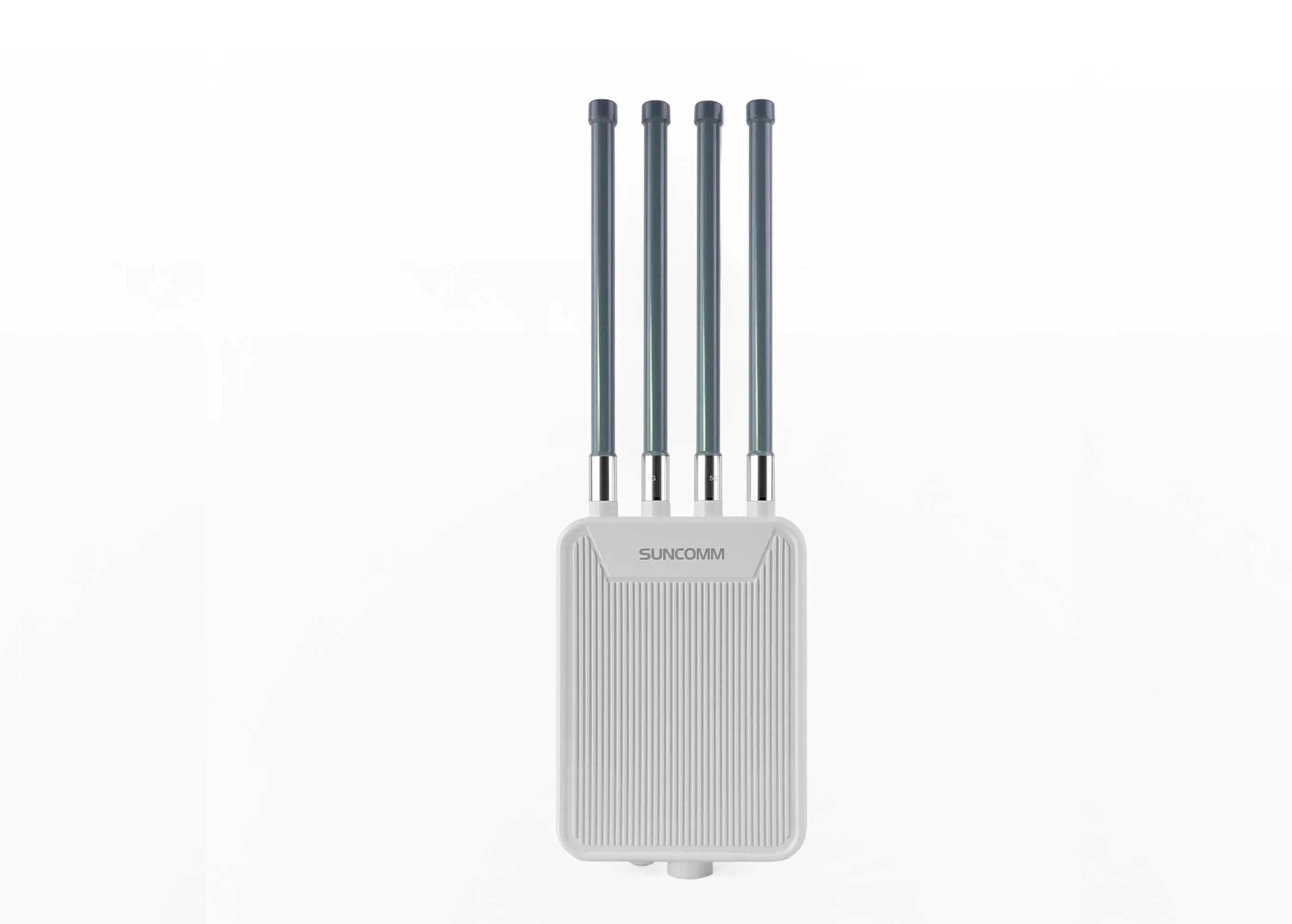
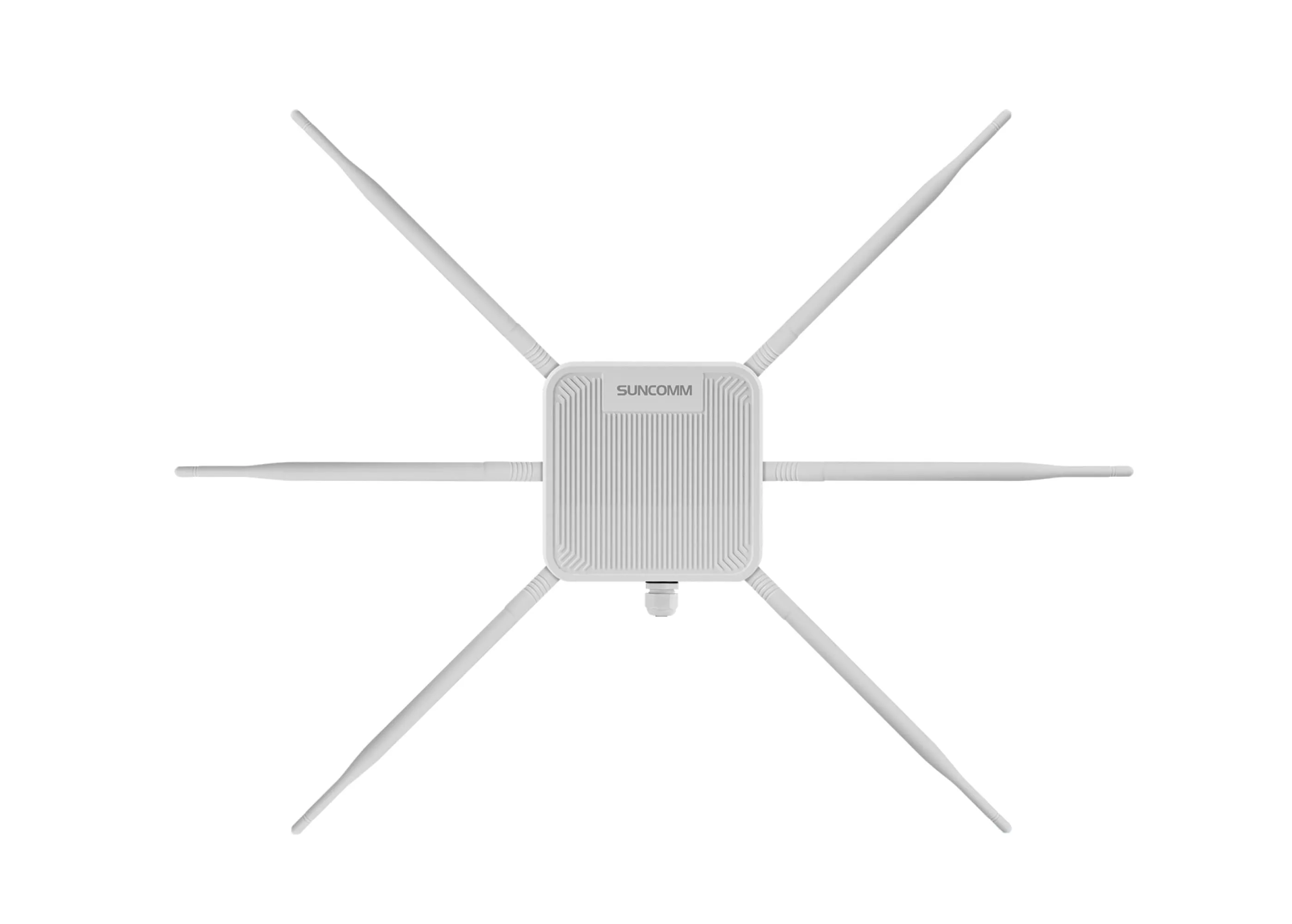
For this project we used a WiFi coverage kit from SUNCOMM. It included:
l An AP3000G WiFi 6 Access Point
l RG402 RF Adapter Cables
l An AN2458 High-Gain Outdoor Antenna
We did not just think of these as products. We. Tested them as part of one system.
The access point sends the WiFi signal the cables connect it to the antenna. The antenna sends the signal to the community. This system approach is important because the final result depends on how all the parts work
People often ask us if WiFi can really reach one kilometer. The answer is that it depends on the environment.
If you are in an area with a clear view it is easier to get a good signal.. In a dense urban area with lots of buildings and obstacles it is much harder.
In a project the distance you can get a good signal depends on many things, including:
l How high you put the equipment
l The type of antenna you use
l The power of the signal
l The capability of the device receiving the signal
l The frequency of the signal
l Interference from devices
l Obstacles like buildings and trees
l The weather
So of just thinking about how far the signal can go we think about how to make it stable and usable for everyone.
.jpg "wifi3_(1).jpg")
It is also important to think about the difference between coverage and capacity. Just because you can get a signal to an area does not mean you can support a lot of users at the same time.
Newer WiFi technologies like WiFi 6 can help with this. They can handle devices and more traffic, which is important for a community WiFi project.
Imagine many people using the internet at the time. Some may be checking email while others are watching videos or making video calls. The network has to be able to handle all of these activities.
So when you plan a community WiFi project you have to think about:
l How big is the area you want to cover?
l How users do you expect?
l What kind of devices will they be using?
l What kind of applications will they be running?
l How internet bandwidth do you have available?
The Roof Is Part of the Network
One thing we learned from this project is that the building itself can be part of the network. The high roof gave us a position for the equipment.
Of putting it on the ground and trying to force the signal through the dense urban environment we used the elevation to our advantage. This is a lesson, for anyone planning a long-range WiFi project.
This can make it possible to cover an area from one central location and reduce the need for a lot of infrastructure.
Course when you put something on a rooftop you have to think about a lot of other things too.
Structural Safety
The pole and the system that holds it up have to be strong enough to withstand the wind and being outside for a time.
Lightning Protection
If you have a metal structure or something on a rooftop you need to make sure it is safe from lightning.
Cable Protection
You have to be careful with the cables that're outside and make sure they are protected from the weather and other things that could hurt them.
Waterproofing
You have to make sure that the equipment and the connectors are protected from the rain and moisture.
Maintenance Access
The equipment should be in a place where the people who fix it can get to it easily and safely.
These things are not always the things you think about but they are very important for making sure the network works well for a long time.
.jpg "wifi8_(1).jpg")