

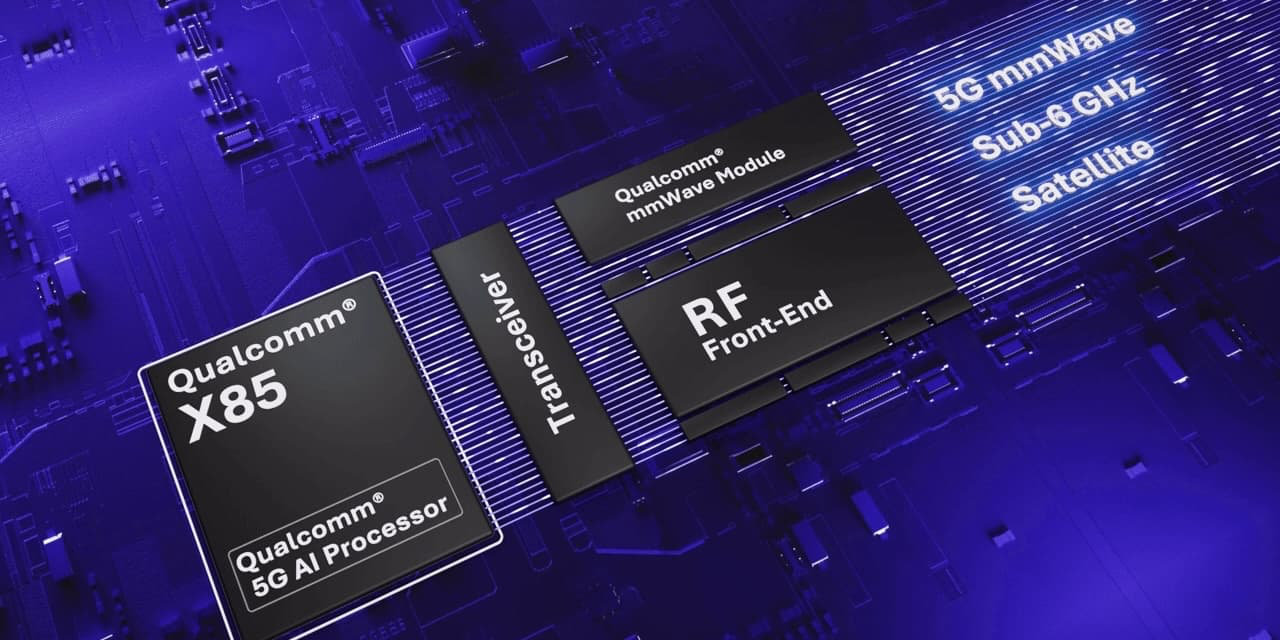
When Qualcomm announced the X85 platform, two things they said caught attention:
“48 TOPS local edge AI computing” and “cloud-based large model integration.”
So, people started wondering:
Does a router even need AI? What's it for?
Basically, it's not just about adding cool stuff. It's a total change in how network devices work.
With X85, your internet box isn't just a box anymore—it's a smart hub that can see what's happening, make choices, and change as things change.
Usually, these boxes work by following simple rules:
l If the signal is bad → switch to a better band
l If things get crowded → slow down traffic
l If data gets lost → try again
That's all set in stone. The box can only react when something goes wrong.
But with 48 TOPS of local AI, X85 changes things. Now, the box can:
l Watch how the network is doing all the time
l Spot when there's interference or too much traffic
l Change its plans before you even notice
Basically, it can guess what's going to happen.
On real networks, this means:
l It can pick the best connection instead of just going for the fastest one
l It can adjust its antennas and signal path
l It can find a good balance between speed and stability
The result is easy: You might not always get the fastest speed, but things will be way more reliable.
If the local AI can react fast, cloud-based models allow it to understand the bigger picture.
By working with the cloud, a box with X85 can:
l Figure out what kind of data is flowing through it
l Tell the difference between video calls, voice chats, cloud apps, and big downloads
l Spot anything weird happening, like errors or dangers
This changes network management from just pushing data around to understanding what the data is for.
For example:
l At home, it can tell the difference between work and fun
l At work, it can protect voice calls and remote work
l In factories, it can send alerts if something strange is being uploaded
The box turns from a simple data line into something that knows what you're trying to do.
X85 isn’t made to do everything on the device or in the cloud.
Instead, it splits the work:
Layer | Responsibility | Advantage |
Local Edge AI | Radio optimization, real-time scheduling, millisecond decisions | Low latency, high reliability, no cloud dependency |
Cloud Large Models | Behavior understanding, strategy learning, cross-device optimization | Broader view, stronger learning capability |
This setup gives you three big changes:
l Network improvements don't depend on simple rules
l Devices get smarter over time
l Features can be added through software
The box isn't stuck being the same forever. It can grow and learn.
For you, it doesn't mean an AI button, but:
l Fewer dropped video calls
l More reliable performance when lots of people are online
l Better performance when things get complicated
l Problems are spotted early, not after they cause trouble
For businesses, it means:
l More reliable remote work
l Smarter network management
l Less complicated operations
l A better base for new tech
This isn't just a new feature—it's a big change in how networks work.

Qualcomm X85 is more than just AI in a router.
It shows where things are headed:
Network devices are changing from simple data lines to smart hubs.
With local processing and cloud smarts working together:
l Networks can understand what's happening
l Systems can adjust themselves
l Devices can get better over time
This is the future for home internet, business networks, and new computing platforms.
In short Qualcomm X85’s mix of local AI and cloud smarts isn't about making a talking router. It's about making networks:
l More reliable More flexible
l Better at handling the real world
It's not asking if a router can run AI. It's answering a bigger question:
In a wireless world that's always changing, can the network learn to think?