

What actually. What we’ve seen in real deployments
Upgrading a 5G router used to be all about what was inside the box. The modem, the chipset and the raw cellular power.
Now the spotlight has shifted to something closer to home: the Wi-Fi.
So here’s the dilemma most people run into:
do you play it safe with Wi-Fi 6 or leap into Wi-Fi 7?
If you just look at the specs
Wi-Fi 7 feels like the obvious winner. Faster speeds, lower lag and a lineup of shiny new capabilities.
Specs don’t always tell the whole story.
After working with 5G CPE across different markets
we’ve found the decision is not always that straightforward.
As a professional 5G router company, SUNCOMM has tested both Wi-Fi 6 and Wi-Fi 7 in 5G router scenarios. Homes, small offices and multi-user environments.
What follows is not a spec comparison. What actually matters when these technologies meet a 5G connection.
First the obvious:
Wi-Fi is no longer the bottleneck most of the time.
A years ago Wi-Fi could easily limit overall performance.
That’s no longer the case.
With 5G routers:
Sub-6 5G typically delivers a few hundred Mbps to ~1 Gbps
mmWave can go much higher but is still limited in deployment
Even Wi-Fi 6 can comfortably handle most of these speeds.
In many of our tests
the bottleneck wasn’t Wi-Fi. It was:
signal quality
Network congestion
Uplink limitations
This is important because upgrading to Wi-Fi 7 does not automatically improve your internet speed if the 5G link itself is the constraint.
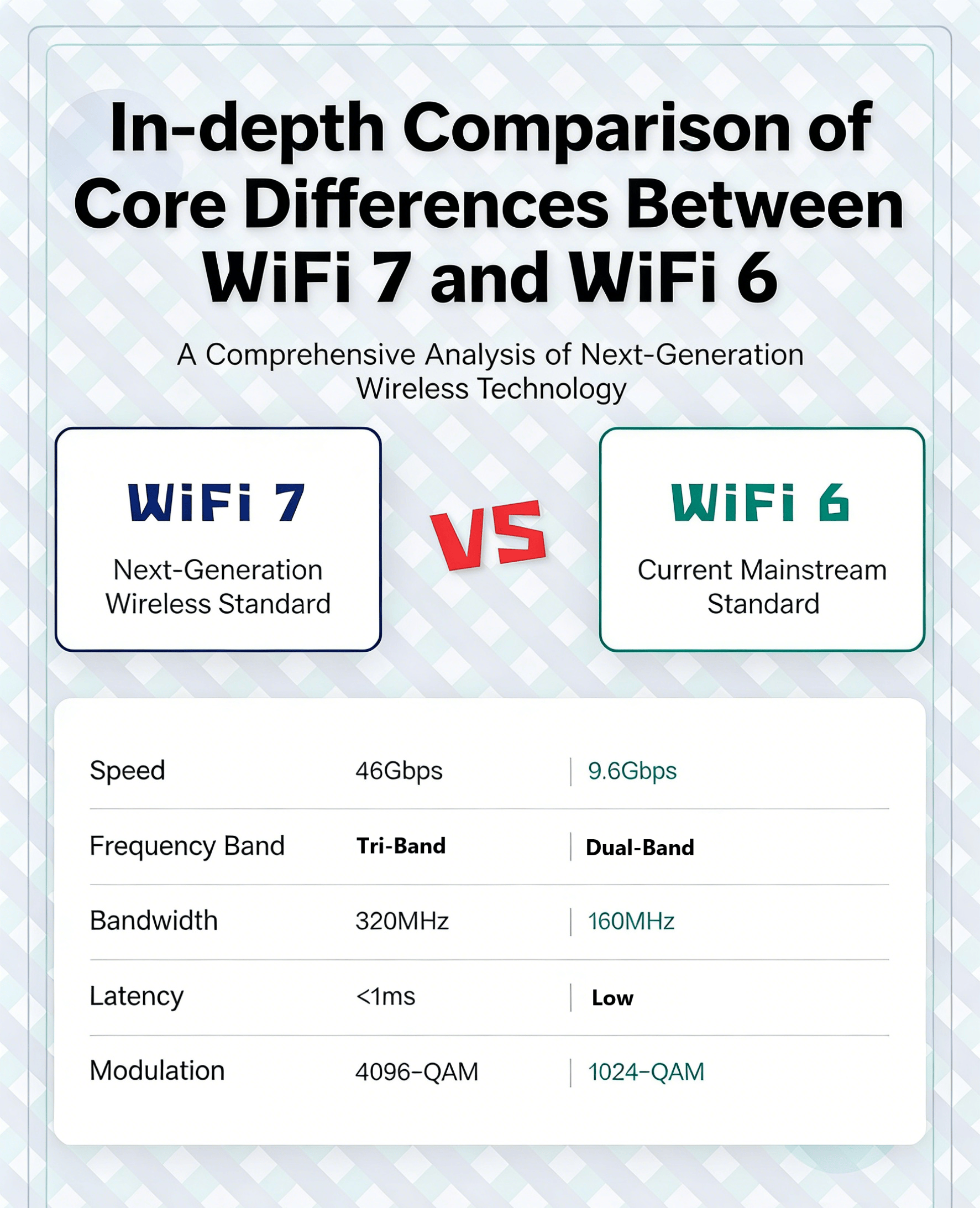
Wi-Fi 7 is not about peak speed.
The real changes are more structural.
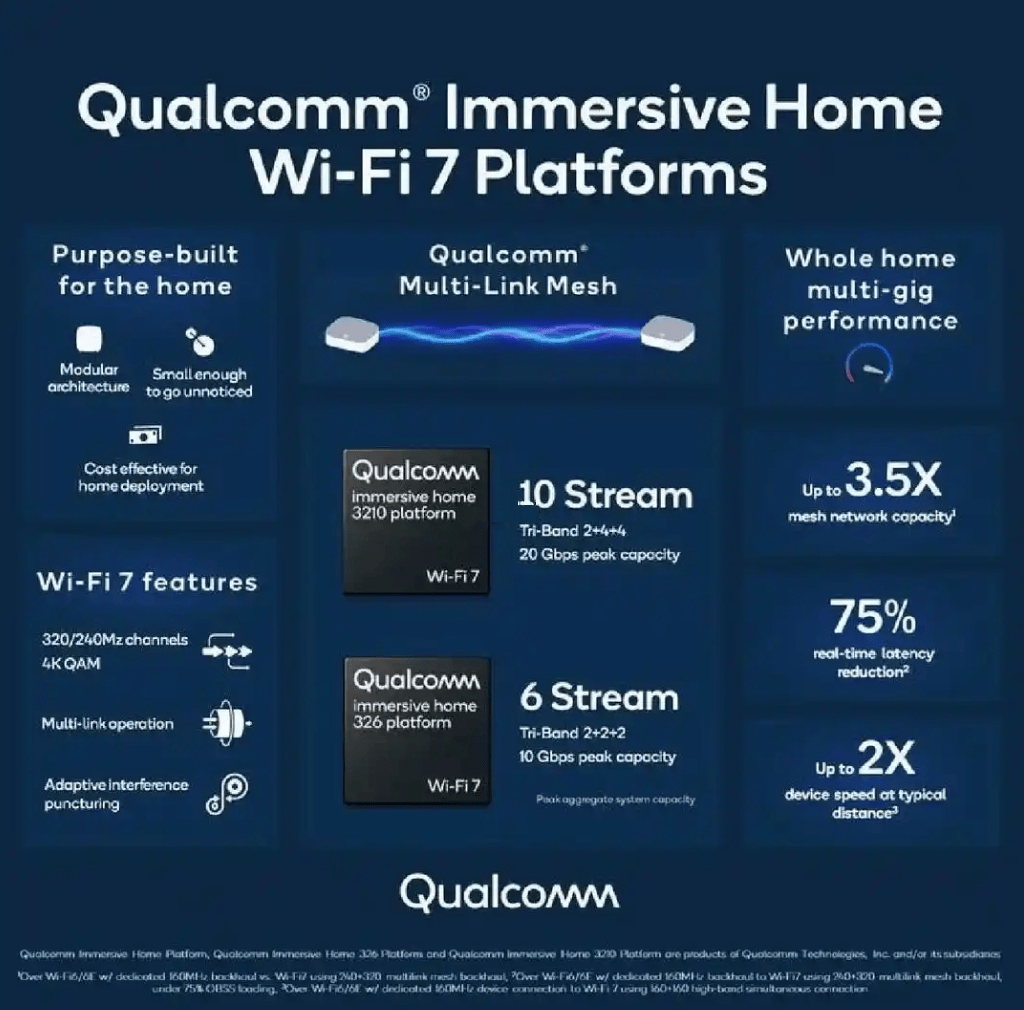
This is probably the meaningful upgrade.
Of connecting on a single band (2.4 GHz, 5 GHz or 6 GHz)
Wi-Fi 7 devices can use multiple bands at the same time.
In practice this helps with:
Reducing latency spikes
Improving connection stability
Handling interference gracefully
In our internal testing MLO made a noticeable difference in environments with:
Many neighboring networks
Mixed device types
signal conditions
Wi-Fi 7 doubles the channel width compared to Wi-Fi 6.
This allows for higher peak throughput. But only under the conditions:
Clean spectrum
Compatible client devices
Minimal interference
In dense urban areas, especially in parts of Europe and Southeast Asia, we found that wide channels are not always usable in practice.
So while the capability is there, real-world gains vary.
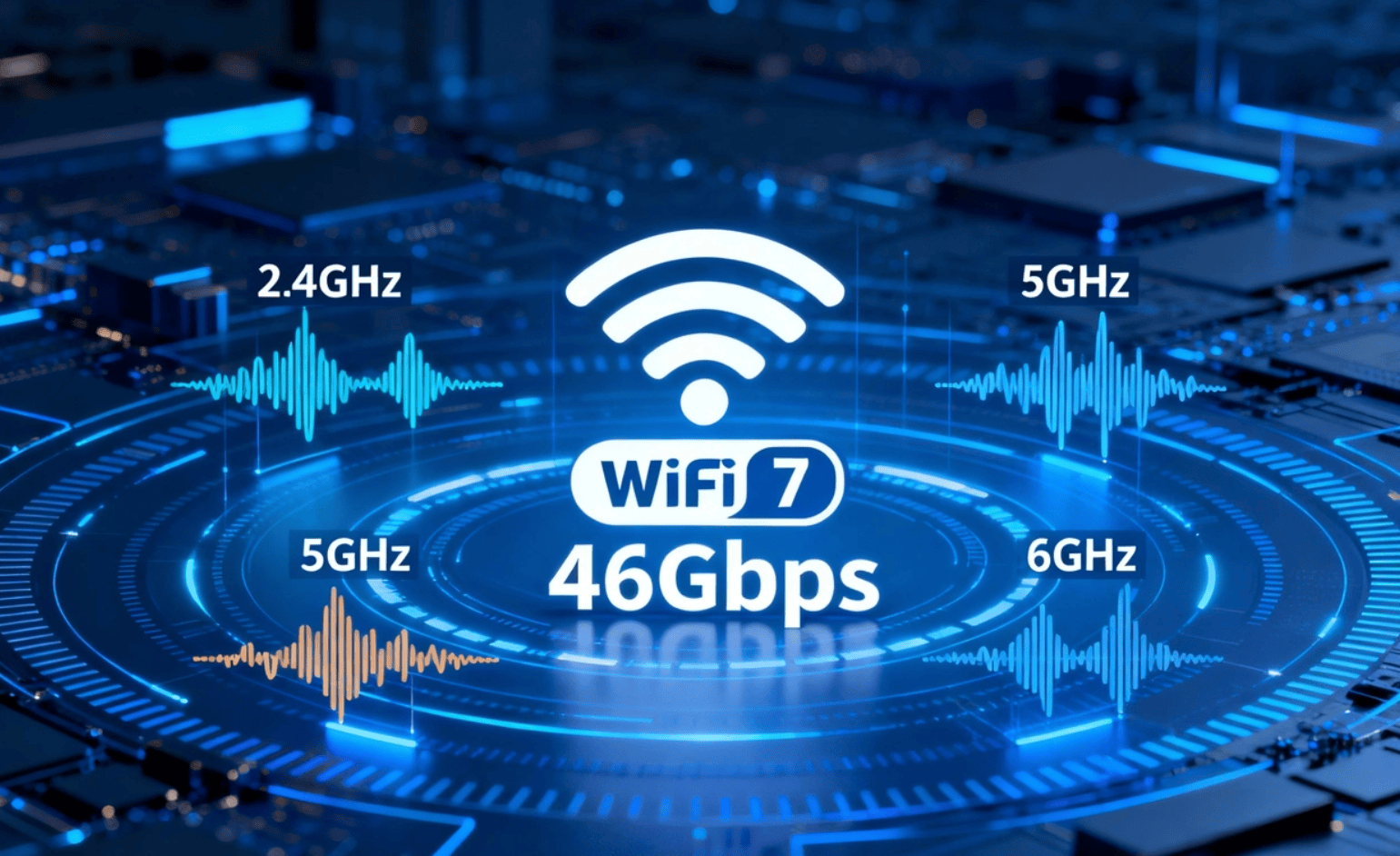
Wi-Fi 7 improves how multiple devices share the network.
In-user scenarios. Homes with many devices or small offices.
We observed:
More consistent performance
Fewer sudden drops in speed
Handling of simultaneous traffic
This is where Wi-Fi 7 starts to show clear value beyond raw speed.
Despite the improvements, Wi-Fi 6 remains a very solid choice for most 5G router deployments.
In many of our projects, Wi-Fi 6 performs more than adequately when:
The 5G connection is under 1 Gbps
The number of devices is moderate
The environment is not heavily congested
In fact in suburban deployments in the U.S., switching from Wi-Fi 6 to Wi-Fi 7 made little visible difference in day-to-day usage.
That’s because the limiting factor was still the 5G network, not the Wi-Fi.
From what we’ve seen
Wi-Fi 7 becomes meaningful in scenarios:
Apartments, shared spaces or offices with active devices.
Wi-Fi 7’s scheduling and MLO help maintain stability when the network is busy.
If the 5G link can consistently deliver high throughput
Wi-Fi 7 ensures the local network can keep up.
This is especially relevant as newer 5G platforms push beyond gigabit speeds.
Applications like:
Real-time collaboration
Cloud gaming
AR/VR
the stability improvements from MLO are often more valuable than peak speed.
One thing we learned: balance matters more than specs.
A 5G router is a system, not a collection of components.
Upgrading Wi-Fi without considering:
Modem capability
Antenna design
Thermal performance
Software tuning
doesn’t necessarily lead to a product.
In some cases we’ve seen optimized Wi-Fi 6 systems outperform poorly tuned Wi-Fi 7 setups.
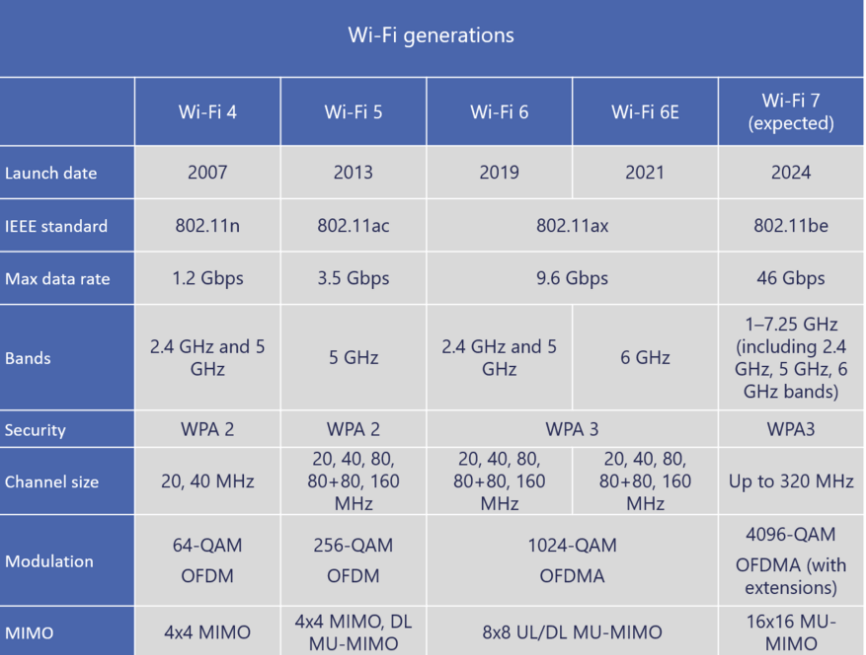
We don’t see Wi-Fi 7 as an upgrade for every 5G router.
Instead we look at it as a tool for scenarios.
For deployments
Wi-Fi 6 remains efficient and cost-effective.
For end or demanding environments
Wi-Fi 7 provides clear advantages.
The key is aligning the Wi-Fi capability with the 5G performance and user environment.
At SUNCOMM, we recognize that the true potential of 5G and fiber-grade broadband can only be realized through an optimized local network. By cooperating with leading chipset providers, we have developed a specialized portfolio of WiFi 7 routers, including our SE1800K, SE3000K, and WR series. These devices are engineered with advanced MLO (Multi-Link Operation) and 4K-QAM capabilities to eliminate internal bottlenecks. Our commitment is to provide enterprise partners with robust, high-capacity Mesh solutions that ensure seamless, low-latency data distribution in high-density environments.
Wi-Fi 7 is a step forward. But it doesn’t replace Wi-Fi 6 overnight.
For users, the difference won’t be about "faster internet," but about:
More stable connections
Better performance under load
Greater resilience in environments
In the end, the question is not: “Is Wi-Fi 7 better, than Wi-Fi 6?”
It’s: “Do you actually need what Wi-Fi 7 improves?”
Based on what we’ve seen in the field, the answer depends entirely on how—and where—the 5G router is being used.
Talk to our experts for more help.


