

A simple guide to get speed, stability and real performance
If you have looked at 5G details or 5G device product pages you have probably seen the term Carrier Aggregation. It often appears next to performance claims like " fast speeds" or "better network efficiency."
What does Carrier Aggregation actually mean. And more importantly why does it matter for real 5G performance?
At SUNCOMM we work closely with 5G device deployments across regions. From our experience Carrier Aggregation is one of the important technologies behind modern 5G.
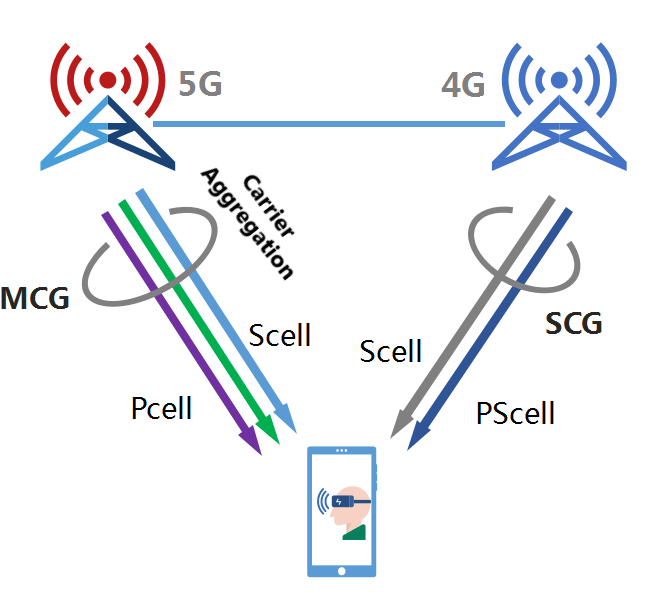
In terms Carrier Aggregation allows a 5G device to connect to multiple frequency bands at the same time.
Of relying on a single channel the network combines several frequency bands into one larger data pipe.
Without Carrier Aggregation. One lane on a highway
With Carrier Aggregation. Multiple lanes working together
lanes mean more data can move at the same time.
Radio spectrum is broken into pieces. Operators do not always have one continuous block of frequency. They often own multiple smaller chunks across different bands.
Carrier Aggregation solves this problem by combining those scattered resources into a connection.
This allows operators to:
Increase bandwidth
Improve data throughput
Use spectrum efficiently
Without Carrier Aggregation even a well-built 5G network would struggle to deliver high speeds consistently.
Carrier Aggregation is not one feature. It comes in several forms depending on how frequencies are combined.
This combines frequency bands within the frequency band.
Example: blocks within n78
Usually more efficient
Lower latency and better coordination
This combines frequency bands from bands.
Example: n78 + n1 or n41 + n28
Expands coverage and capacity
common in real deployments
In our field testing this is where Carrier Aggregation becomes especially useful. Balancing speed and coverage.
This is an advanced form where:
TDD bands
and FDD bands
are combined in one connection.
This helps:
Improve uplink performance
Balance traffic load
Enhance efficiency
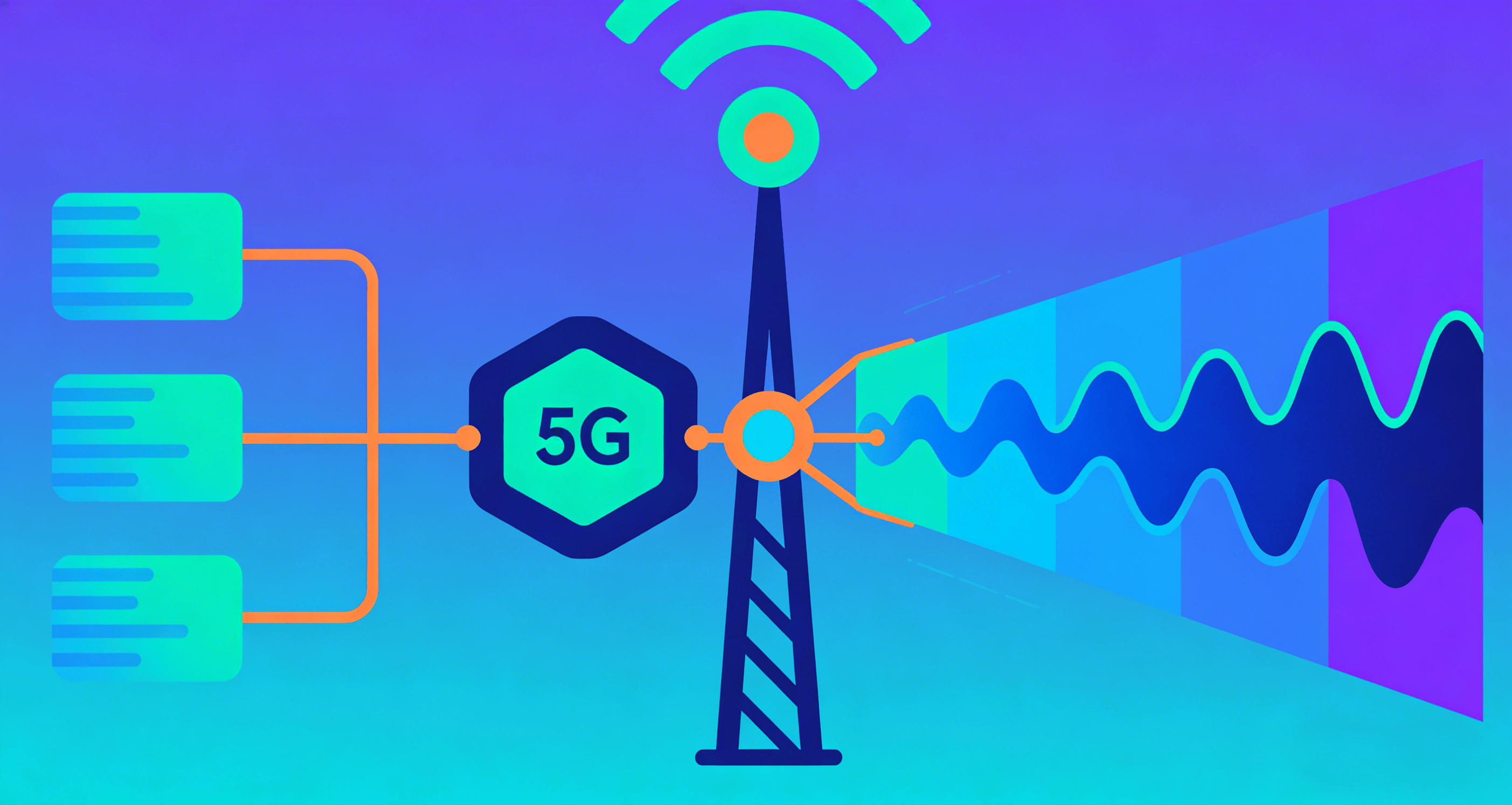
From a user perspective Carrier Aggregation impacts more than just peak speed.
By combining frequency bands devices can achieve significantly higher data rates.
This is how many 5G networks reach:
Fast speeds
Fast peaks in advanced deployments
One thing we have consistently seen in deployments is that Carrier Aggregation helps smooth out performance.
Of relying on a single band the connection is distributed across multiple frequency bands.
This reduces:
Sudden speed drops
Sensitivity to interference
Uplink is often overlooked,. It matters for:
Video calls
Cloud uploads
Remote work
With uplink Carrier Aggregation devices can transmit data over channels improving consistency and responsiveness.
For 5G routers and devices Carrier Aggregation is critical.
A device sits at the edge of the network often serving users or devices. Its performance depends heavily on how it can utilize available spectrum.
From our experience at SUNCOMM:
Devices with Carrier Aggregation capability perform better under load
4CA or 6CA configurations significantly improve user experience
Uplink aggregation is especially important for enterprise scenarios
This is why Carrier Aggregation support is often a differentiator between entry-level and high-end 5G devices.
It is important to understand that Carrier Aggregation performance depends on more than the device.
Several factors affect real-world results:
Operator network configuration
Available spectrum bands
Signal quality and environment
In some regions even if a device supports Carrier Aggregation the network may not fully utilize it yet.
"More Carrier Aggregation always means speeds"
Not necessarily.
If signal quality is poor. If the network is congested adding more frequency bands may not deliver proportional gains.
"Carrier Aggregation only affects download speed"
This is also misleading.
Uplink Carrier Aggregation plays a role in modern applications especially as more services rely on real-time data transmission.
As 5G evolves toward 5G, Carrier Aggregation will become even more important.
We are already seeing:
5CA and 6CA configurations
bandwidth combinations
Smarter scheduling and optimization
This will further improve both speed and consistency in real-world networks.
Carrier Aggregation is one of the technologies that makes modern 5G possible.
It is not about higher peak speeds. It is about:
Using spectrum efficiently
Maintaining connections
Delivering consistent performance in real environments
From what we have seen across multiple deployments a well-optimized Carrier Aggregation setup often matters more, than raw device specs.
So the time you evaluate a 5G device or network it is worth looking beyond the headline speeds. And paying closer attention to how Carrier Aggregation is implemented.
As a reliable 5G router company leveraging over 15 years of R&D in wireless communications, SUNCOMM specializes in maximizing spectrum efficiency through advanced Carrier Aggregation technologies. By integrating high-performance platforms into our flagship SE05 Ultra routers and SE06 Ultra 5G routers, we deliver a hardware-software synergy that optimizes multi-band aggregation (such as 3CC/4CC) for superior throughput and link stability. Our end-to-end FWA solutions are engineered to help global operators and enterprise partners deploy fiber-grade wireless connectivity in the most demanding network environments.
Talk to our experts for more help.


