

5G connectivity are becoming prevalent widely, and you may have encountered terminology such as SA (Standalone) and NSA (Non-Standalone) being used.
Like many others, you are likely curious what on earth the distinction is. Both technologies are 5G, they both give you high data rates, and telecommunication providers globally use them.
At SUNCOMM, we work with 5G stuff everyday. Trust us, knowing the difference between SA and NSA matters. It's not just for tech people; it also matters if you're a business that depends on the Internet.

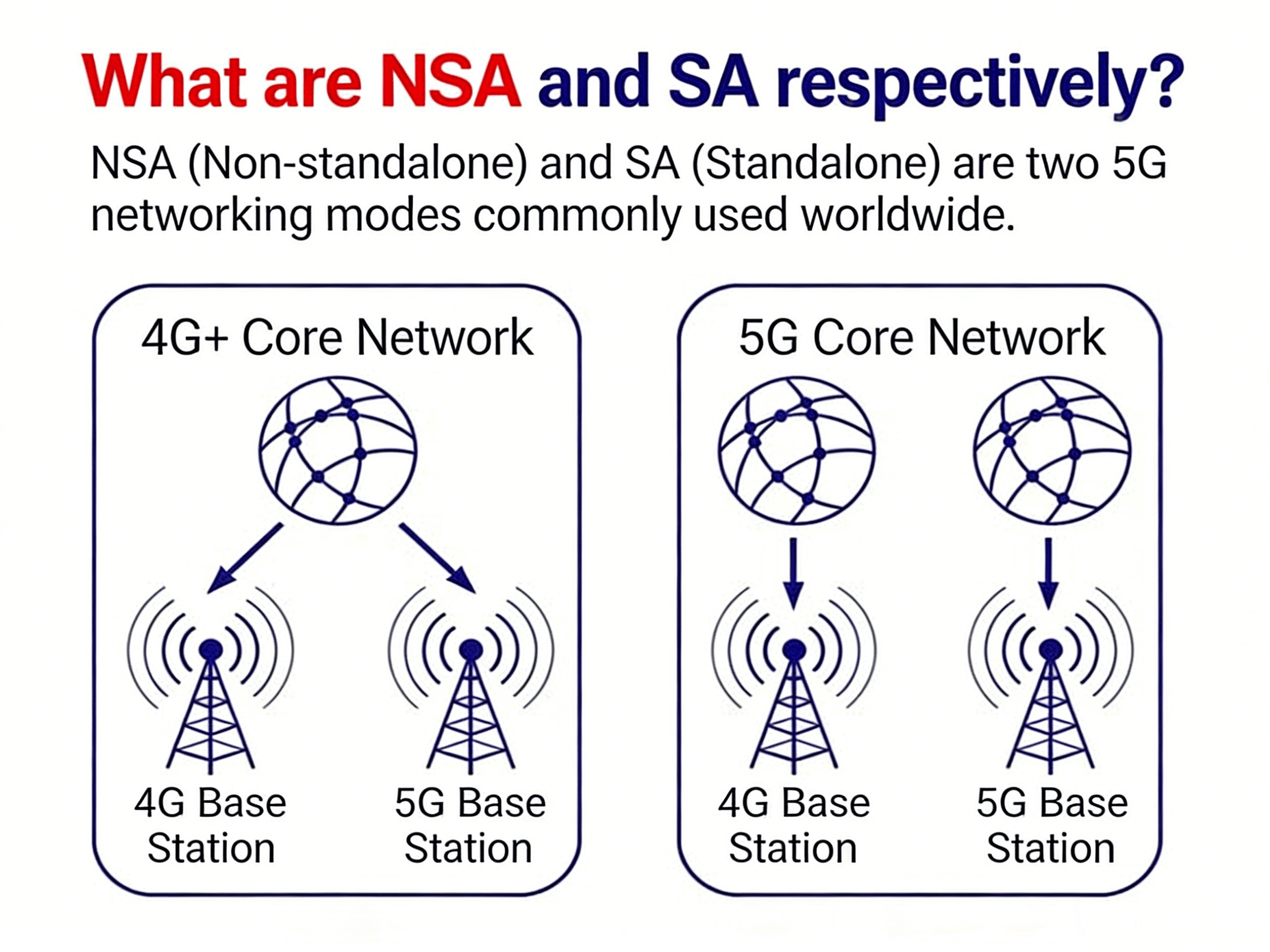
When 5G first came out, most carriers used NSA.
Using NSA, 5G technology operates in conjunction with existing 4G LTE infrastructure already present:
4G LTE is the boss
5G just gives it more power
They both work together
That's how carriers got 5G going without having to redo everything.
NSA made a lot of sense back then. It was cheaper and faster to do it that way.
Places like the United States and Europe used NSA to start building their 5G networks.
The Next Level: SA
SA is the real deal when it comes to 5G.
With SA:
5G connects right to a 5G core
It doesn't need 4G LTE to tell it what to do
It can do all the cool 5G stuff
SA lets 5G do things that NSA couldn't, like:
Be super quick
Slice up the network
Connect tons of IoT devices
Use the network in a smarter way
Basically, SA lets 5G be its own thing instead of relying on 4G LTE.
SA should be better, but how it works in the real world depends on how the carrier sets it up.
We've tested a bunch of 5G devices and noticed a few things.
NSA networks usually cover more area at first because they use the existing 4G LTE stuff.
SA networks might start small, but they'll grow as carriers their core networks.
NSA is still more common just because it takes time to new systems.
SA networks are way faster.
SA doesn't need 4G LTE, so the data gets where it needs to go a lot quicker.
That's good for:
Gaming on the cloud
AR/VR
Factories
Controlling things far away
However performance improvements is contingent upon the service provider and network congestion.
SA networks can also send data better, especially if they're using the newest network tech.
If you're doing things like monitoring stuff from afar or using cloud-based programs, sending data is just as important as getting it.
SA networks get better at this over time.
Why NSA is Still Around
SA is better, but NSA is still important.
New mobile core network needs a lot of money. NSA lets carriers switch switch to 5G more easily.
Most of the world uses a mix of NSA and SA right now.
If you want your devices to work everywhere, they need to support both SA and NSA.
Devices need to work with both SA and NSA.
A device needs to:
Know which network it's on
Switch between NSA and SA
Stay connected no matter what
We make 5G devices at SUNCOMM. Trust us, network differences can mess with how well things work. Things like sending data, combining networks, and cutting down lag time are all affected.
Devices that can handle both networks are better for use around the world.
Eventually, 5G networks will all be SA.
SA lets carriers do all the cool things they want to do with 5G, especially for factories.
But it'll take time to get there. NSA networks will still be around for a while as carriers new equipment little by little.
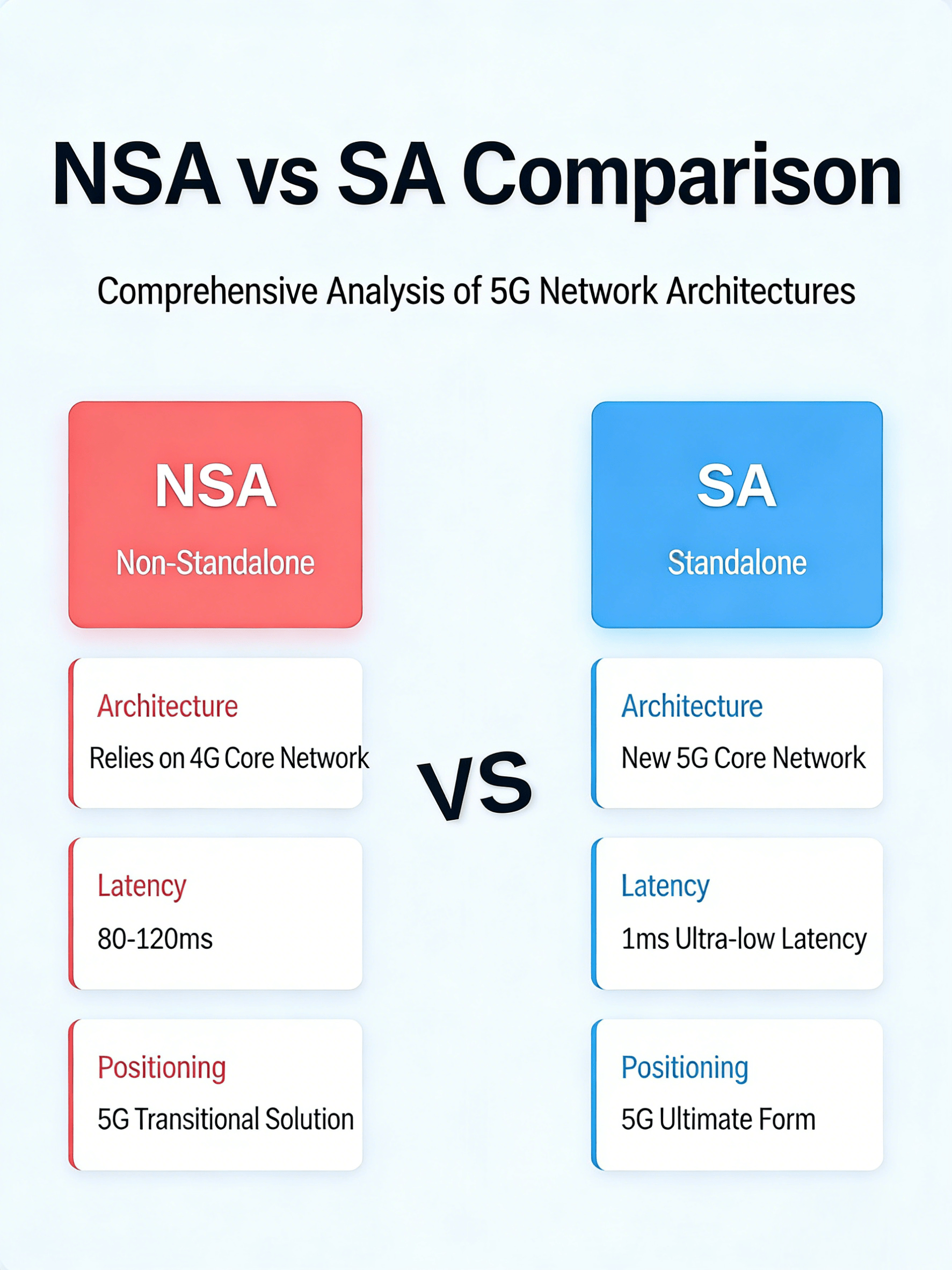
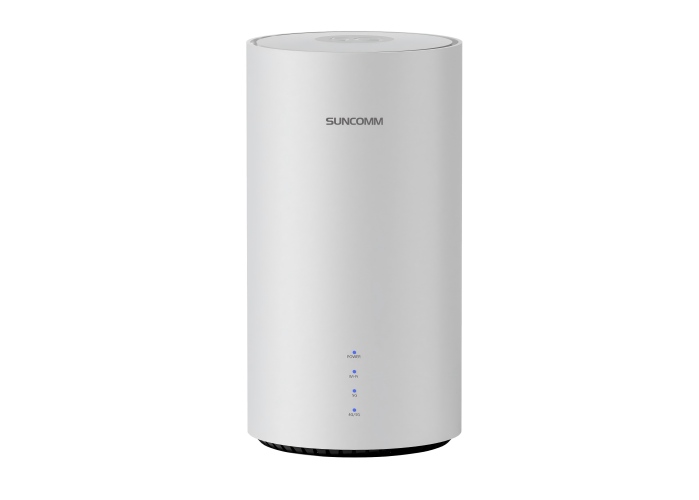
At SUNCOMM, we understand that the transition from NSA to SA is a critical phase for global operators and enterprise clients. By cooperating with world-class chipset leaders, we have optimized our full range of 5G CPE devices and other routers—including the SDX65 5G CPE Router and O2 5G Router—to support both SA and NSA architectures seamlessly. As a 5G router company leveraging 15+ years of R&D expertise, we ensure our hardware delivers the ultra-low latency and network slicing capabilities required for mission-critical industrial IoT. Our commitment is to provide robust, high-performance solutions that safeguard our partners’ infrastructure investments throughout the 5G lifecycle.
The difference between 5G SA and NSA isn't just a tech thing. It's all about how mobile networks are growing.
NSA helped 5G get started quickly by using the 4G LTE stuff that was already there.
SA lets 5G do everything it's supposed to do with its own dedicated core network.
The main thing for users and businesses to remember is that both networks are part of 5G right now.
As networks keep getting better, devices that can work with anything will be the best.
Talk to our experts for more help.


