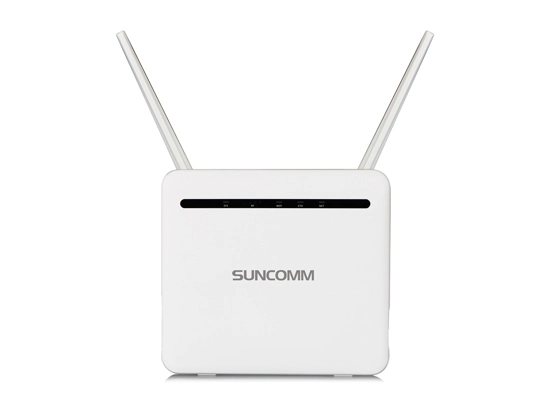

As 5G connectivity continues to expand into construction sites, industrial facilities, smart city infrastructure, and remote monitoring stations, deploying reliable outdoor networking equipment has become increasingly important. Unlike indoor networks, outdoor installations often face challenges such as limited power availability, complex wiring requirements, and harsh environmental conditions.
Power over Ethernet (PoE) is a networking technology that delivers both electrical power and data through a single Ethernet cable.
For organizations deploying a 5G outdoor router, PoE offers a practical way to simplify installation, reduce infrastructure requirements, and lower total deployment costs. Instead of running separate power and network cables, installers can use a single Ethernet cable to provide both connectivity and power, making deployment faster and more efficient.
As industrial networking projects become more distributed, PoE has evolved from a convenience feature into a critical component of modern outdoor connectivity solutions.
Power over Ethernet (PoE) enables network devices to receive electrical power and data through the same Ethernet cable. The technology is standardized by IEEE 802.3 specifications and is widely used in wireless access points, IP cameras, VoIP phones, and industrial networking equipment.
For outdoor networking deployments, PoE is particularly valuable because power outlets are often unavailable at ideal installation locations. Network devices may need to be mounted on:
Utility poles
Building rooftops
Surveillance towers
Construction site structures
Without PoE, installers typically need separate electrical wiring, additional conduit systems, and certified electricians to provide power to each device.
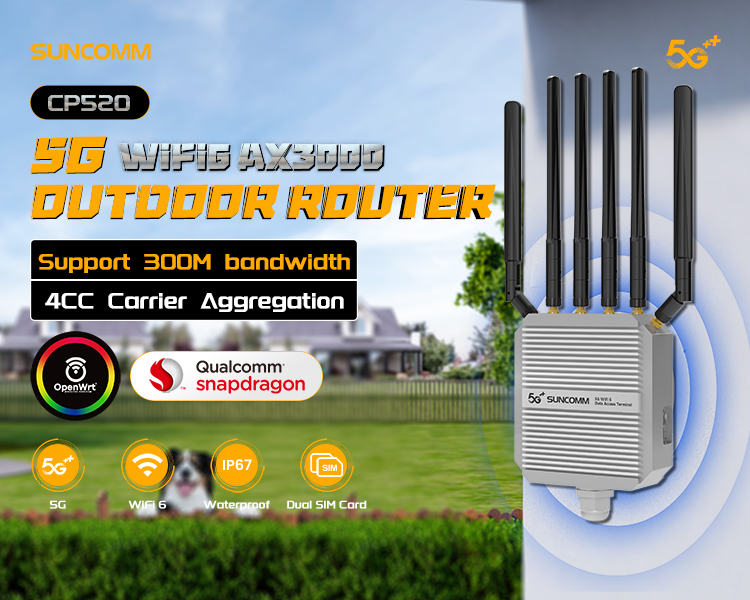
Modern industrial outdoor routers, including SUNCOMM's outdoor networking solutions, support 48V PoE, allowing both power and data transmission through a single cable. This significantly reduces installation complexity while maintaining reliable network performance.
The growing popularity of PoE is reflected in the broader networking industry. According to IEEE standards, PoE technology can support power delivery of up to 90W under the IEEE 802.3bt standard, making it suitable for high-performance networking equipment and outdoor communication devices.
Before PoE became widely adopted, outdoor router deployments often involved significant logistical and operational challenges.
Traditional installations require separate cables for power and data transmission. This increases material costs and often requires additional trenching, conduit installation, or electrical work.
When power infrastructure must be installed separately, deployment schedules become more complicated. Coordinating electricians, network engineers, and site managers can significantly extend project timelines.
Multiple cables and power components create additional failure points. Troubleshooting power issues often requires on-site inspections, increasing operational expenses over time.
The location of electrical outlets frequently determines where equipment can be installed. Unfortunately, the best networking location is rarely the same as the most convenient power location. This limitation can negatively affect signal quality, coverage, and overall network performance.
PoE addresses many of the challenges associated with traditional outdoor networking installations.
Perhaps the biggest advantage of PoE is simplicity. A single Ethernet cable provides both power and network connectivity.
Benefits include:
Fewer cables to install
Cleaner deployment environments
Reduced infrastructure requirements
Faster installation processes
This approach is especially useful for remote deployments where cable management can become difficult.
By eliminating separate power wiring, organizations can reduce material and labor expenses.
Typical savings may come from:
Less copper wiring
Reduced conduit requirements
Lower electrician labor costs
Shorter installation times
For large-scale projects involving dozens of devices, these savings can become substantial.
PoE allows installers to deploy networking equipment more quickly without extensive electrical modifications.
Many modern outdoor networking devices can be mounted and connected using only:
A PoE switch or injector
An Ethernet cable
A mounting structure
This streamlined approach reduces deployment complexity and helps accelerate project completion.
Since power no longer depends on nearby electrical outlets, equipment can be installed where signal performance is optimal rather than where power is available.
This flexibility is particularly valuable for:
Cellular signal optimization
Wireless coverage planning
Rooftop installations
Pole-mounted deployments
For an outdoor cpe 5g solution, the ability to position equipment in the best possible location can significantly improve network reliability and throughput.
| Feature | PoE Deployment | Traditional Power Deployment |
|---|---|---|
| Number of Cables | One | Two or More |
| Installation Complexity | Low | High |
| Deployment Speed | Fast | Slower |
| Labor Requirements | Reduced | Increased |
| Maintenance Effort | Lower | Higher |
| Mounting Flexibility | Excellent | Limited |
| Scalability | Easy | More Difficult |
| Overall Cost Efficiency | High | Moderate |
For organizations planning industrial-scale connectivity projects, PoE often provides a more efficient long-term solution.
Construction projects frequently operate in locations without permanent internet infrastructure. A PoE-enabled 5G outdoor router can provide immediate connectivity for:
Project management systems
Workforce communication
Site surveillance
Equipment monitoring
Because power and data travel through a single cable, deployment remains simple even in temporary environments.
Modern surveillance networks rely heavily on PoE technology.
A PoE-enabled router can support:
IP cameras
Security gateways
Remote access systems
Video monitoring platforms
This simplifies infrastructure planning while ensuring reliable connectivity.
Smart city deployments often require networking equipment to be installed on streetlights, traffic poles, and public infrastructure.
PoE helps cities reduce installation complexity while supporting:
Traffic management systems
Environmental sensors
Public Wi-Fi services
Smart surveillance networks
Industries such as energy, agriculture, mining, and utilities increasingly depend on remote monitoring systems.
A 5g cpe device equipped with PoE can deliver reliable connectivity for:
Solar farms
Wind power facilities
Water treatment plants
Pipeline monitoring systems
These environments often benefit from simplified installation and reduced maintenance requirements.
Not all outdoor routers are designed for industrial applications. When evaluating a PoE-enabled 5G outdoor router, several factors should be considered.
Outdoor networking equipment should withstand challenging environmental conditions.
Look for:
IP65 protection or higher
Dust resistance
Water resistance
Wide operating temperature ranges
Some SUNCOMM outdoor router models feature IP67-rated enclosures designed for demanding environments.
A modern industrial router should support:
NSA and SA 5G networks
Global frequency bands
High-speed data transmission
Low-latency applications
SUNCOMM outdoor routers utilize Qualcomm SDX62 and SDX75 platforms to support high-performance connectivity.
Reliable outdoor networking requires strong signal reception.
Important features include:
4×4 MIMO technology
High-gain antennas
Band Lock support
Cell Lock capabilities
These features help maximize signal quality and network stability.
For large deployments, centralized management becomes critical.
Useful capabilities include:
VPN support
TR-069 remote management
IPv4/IPv6 compatibility
IP Passthrough
Firewall protection
These features help organizations maintain secure and scalable networks across multiple sites.
PoE has become a key technology for modern outdoor networking deployments because it simplifies installation, reduces cabling requirements, and lowers overall project costs. By delivering power and data through a single Ethernet cable, organizations can deploy 5G outdoor routers more efficiently while maintaining greater flexibility in equipment placement. For applications ranging from construction sites to smart city infrastructure, PoE-enabled industrial routers provide a practical foundation for reliable and scalable connectivity.
PoE stands for Power over Ethernet, a technology that allows electrical power and data to be transmitted through the same Ethernet cable.
PoE eliminates the need for separate power wiring, making outdoor installations faster, simpler, and more cost-effective.
Yes. Modern PoE standards can deliver sufficient power for many industrial-grade 5G outdoor routers, wireless access points, and surveillance devices.
When combined with industrial-grade equipment featuring IP65 or IP67 protection, PoE is widely used in demanding outdoor environments such as construction sites, transportation networks, and utility infrastructure.
Common industries include construction, smart cities, energy, agriculture, mining, transportation, security surveillance, and remote monitoring.
IEEE Standards Association – IEEE 802.3 Power over Ethernet (PoE) Standards
https://standards.ieee.org
National Institute of Standards and Technology (NIST) – Cybersecurity and Network Infrastructure Resources
https://www.nist.gov
Wikipedia – Power over Ethernet
https://en.wikipedia.org/wiki/Power_over_Ethernet
International Electrotechnical Commission (IEC) – IP Protection Ratings Overview
https://www.iec.ch