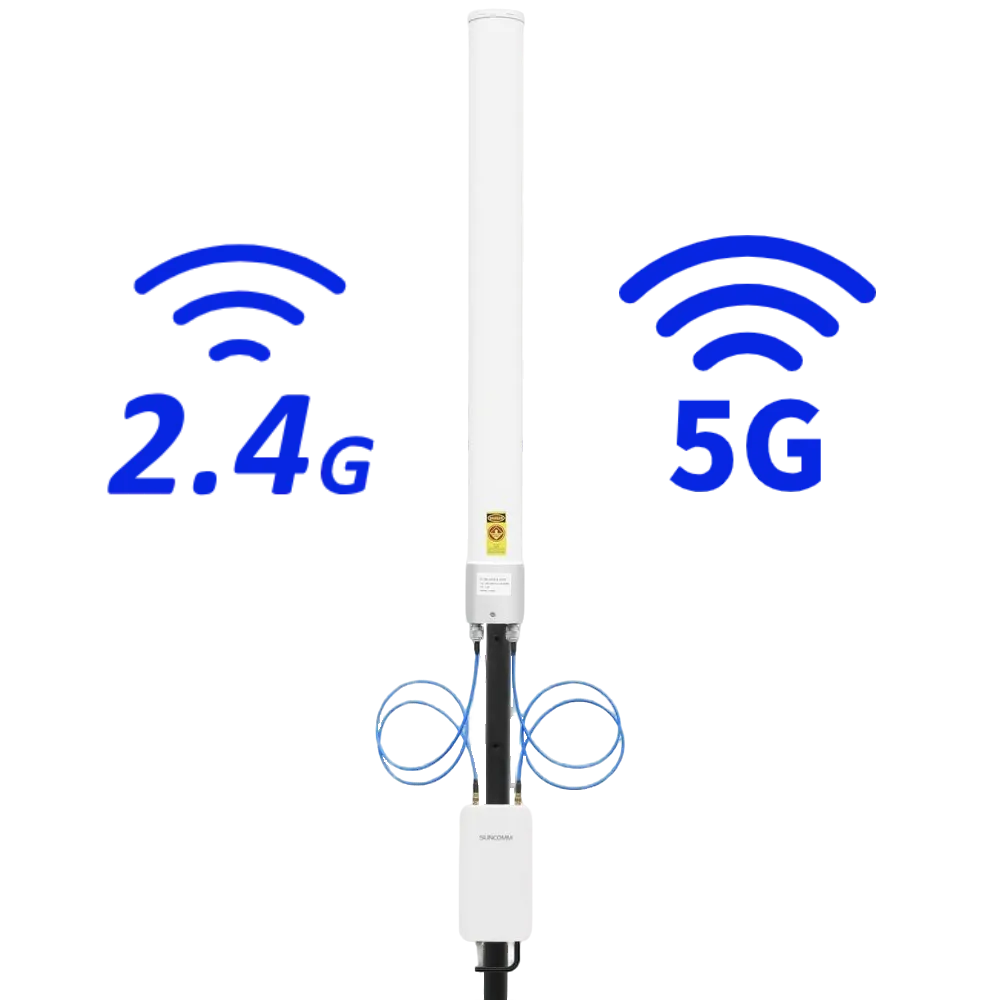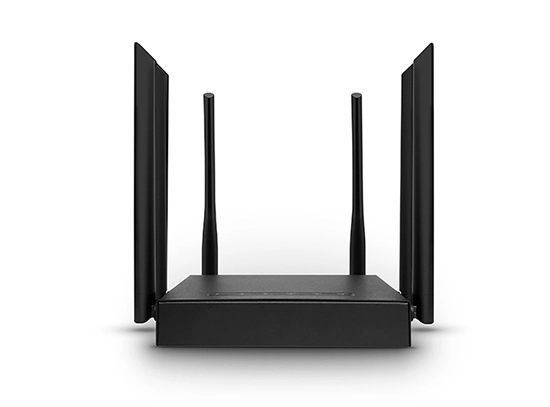

Fixed Wireless Access has moved from a niche solution to a serious alternative to traditional broadband. In regions it is no longer just a backup. It is the primary way people get online.
Looking ahead to 2026-2030 the conversation is shifting. It is less about whether Fixed Wireless Access works and more about how it can go.
From what we have seen at SUNCOMM. Working with 5G CPE across the United States, Middle East, Europe and Southeast Asia. The next few years will not be defined by a breakthrough but by a set of gradual meaningful improvements.

A years ago Fixed Wireless Access was often positioned as a solution for rural areas or a temporary alternative where fiber was not available. That perception is changing.
In markets especially parts of the United States and Gulf countries we have seen Fixed Wireless Access compete directly with fiber in home broadband small business connectivity and temporary and flexible deployments. The reason is simple: deployment speed and flexibility.. That advantage is not going away.
Peak speeds already look impressive on paper. What users actually care about is consistency. Between 2026 and 2030 we expect more advanced carrier aggregation, better uplink performance and improved scheduling and traffic management. With the evolution toward 5G-Advanced networks will handle load efficiently especially in dense environments.
Historically Fixed Wireless Access has been optimized for download- use. That is changing. Modern applications depend heavily on performance, such as video conferencing, cloud storage, remote work and live streaming. Between 2026 and 2030 uplink improvements will come from carrier aggregation, smarter resource allocation and better antenna and RF design.
Artificial Intelligence is starting to play a role in both networks and devices. In Fixed Wireless Access this does not mean features. It means smarter signal selection, adaptive antenna tuning, traffic prediction and real-time optimization. On the device side newer platforms are beginning to integrate Artificial Intelligence capabilities for signal optimization, power management and thermal control.
As performance expectations rise CPE design becomes more critical. Between 2026 and 2030 we expect focus on thermal management, antenna architecture, RF optimization and system-level tuning. A designed CPE often outperforms a higher-spec chipset with poor system integration.
Millimeter wave has always promised ultra-high speeds but deployment has been limited. That will likely change.. Not everywhere. We expect millimeter wave to expand in urban areas enterprise campuses and fixed installations with line-of-sight. However Sub-6 GHz will remain the backbone of Fixed Wireless Access globally.
Instead of competing directly Fixed Wireless Access and fiber will increasingly complement each other. Common models we are already seeing include fiber backhaul plus Fixed Wireless Access mile, hybrid routers with dual WAN and Fixed Wireless Access as redundancy for critical connections. This hybrid model offers deployment, greater flexibility and improved reliability.
Fixed Wireless Access is no longer for residential use. Between 2026 and 2030 growth will come from medium businesses, retail chains, construction sites, temporary deployments and industrial IoT gateways. These use cases require uplink, low latency and reliable multi-device support.
One thing we have consistently observed across regions is that Fixed Wireless Access adoption does not follow a pattern. In the United States it often competes with cable and fiber. In the Middle East it is used for deployment. In parts of Europe it fills coverage gaps. In Southeast Asia it supports both rural use. Between 2026 and 2030 these regional differences will continue to shape how Fixed Wireless Access evolves.

We do not see the future of Fixed Wireless Access being defined by one headline feature.
Instead it is about balance: speed versus stability, downlink versus uplink, performance versus power consumption.
From what we have seen in deployments the most successful Fixed Wireless Access solutions are not the ones with the highest specs.
But the ones that deliver consistent predictable performance. Fixed Wireless Access is the key, to unlocking this balance.
At SUNCOMM we believe that Fixed Wireless Access will continue to play a role in the future of broadband. Fixed Wireless Access will be the way people get online in many regions.
We are excited to see how Fixed Wireless Access will evolve in the few years.